
A Real Estate Debt Fund Reg 506(c) is a private investment vehicle where investors pool capital to issue loans secured by real estate, rather than buying properties directly.
The name breaks down into two core parts: what the fund does (Real Estate Debt) and how it legally raises money (Rule 506(c) of Regulation D under US securities law).
Part 1: How the "Debt Fund" Side Works
Instead of buying real estate, equity, or property shares, a debt fund acts as the bank. It raises capital from private investors and lends it out to real estate developers, buyers, or operators.
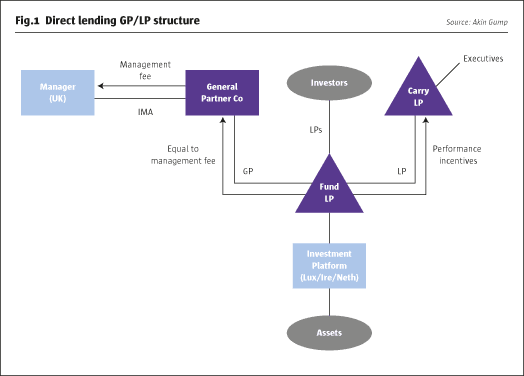
In a standard Limited Partnership structure like the one shown above:
- General Partner (GP): Sours loans, manages risk, and oversees fund operations.
- Limited Partners (LPs): The private investors providing capital in exchange for passive yield.
- The Revenue Model: The fund collects mortgage payments (interest and points) from borrowers and distributes fixed or preferred yields to investors.
- Collateral: The loans are backed by physical property (typically a 1st or 2nd lien mortgage). If a borrower defaults, the fund forecloses on the real estate.
Part 2: What "Reg 506(c)" Means
Under Regulation D, Rule 506(c) of the SEC guidelines, the fund operates under very specific fundraising rules:
1. General Solicitation Allowed
The fund manager can publicly advertise the offering. You'll see these funds promoted on websites, social media, podcasts, billboards, or email blasts. (In contrast, traditional 506(b) funds require a pre-existing relationship and cannot advertise publicly.)
2. Accredited Investors Only
100% of the investors in a 506(c) fund must be accredited investors. To qualify, an individual typically needs:
- Net worth exceeding $1 million (excluding primary residence), OR
- Annual income exceeding $200,000 ($300,000 for married couples) for the past two years, OR
- Specific professional financial credentials (like a Series 7, 65, or 82 license).
3. Mandatory Third-Party Verification
It isn't enough for an investor to simply check a box saying "I'm accredited." The fund manager is legally required to verify proof—usually via tax returns, bank/brokerage statements, or a letter from a CPA, attorney, or wealth advisor.
Key Risk vs. Return Profile
| Feature | Equity Real Estate Fund | Debt Real Estate Fund (506(c)) |
|---|---|---|
| Primary Goal | Asset appreciation & long-term growth | Steady income / yield generation |
| Position in Stack | First-loss position (highest risk) | Senior or subordinated debt (secured by property) |
| Returns | Variable (uncapped upside if property skyrockets) | Capped at contract interest rate (e.g., 8–12% yields) |
| Tax Treatment | Capital gains, depreciation, K-1 benefits | Mostly ordinary income interest (K-1 or 1099) |
Bottom Line: A 506(c) Real Estate Debt Fund lets accredited investors play the role of the mortgage lender to earn fixed interest income backed by real estate, while allowing the fund manager to market the opportunity publicly.
Evaluating a private real estate debt fund requires analyzing two distinct layers: the underlying loans (where the income and default risk live) and the fund manager (who originates, underwrites, and services those loans).
Because debt returns are capped at the interest rate, your upside is fixed—which means thorough due diligence is entirely focused on downside protection.
Here is a structured, step-by-step framework to evaluate a 506(c) private debt fund.
1. Underwriting & Loan Portfolio Metrics
The safety of your principal depends on how conservatively the fund lends capital to borrowers.
- Loan-to-Value (LTV) & Loan-to-Cost (LTC): Look for funds targeting LTVs under 65–70%. Lower LTVs mean the borrower has significant equity ("skin in the game") acting as a buffer. If the property loses 20% of its market value, your loan remains fully covered.
- Lien Position: Prioritize funds issuing 1st Position Trust Deeds / Senior Mortgages. In a default, 1st lien debt gets paid back before 2nd lien/mezzanine lenders or equity investors see a dime.
- Borrower Vetting Criteria: How does the fund vet borrowers? Do they mandate personal guarantees, minimum liquidity/credit score requirements, and prior track record in that specific real estate sector?
- Asset Class & Geographic Concentration: Diversification reduces risk. Is the fund concentrated in a single market (e.g., suburban Florida) or asset type (e.g., ground-up multi-family development vs. stabilized industrial)?
2. Fund Structure, Liquidity & Leverage
Private debt funds handle capital flow and fund-level leverage differently, which directly impacts your liquidity and risk exposure.
| Dimension | Key Questions & Red Flags |
|---|---|
| Open-Ended vs. Closed-Ended | Open-ended funds allow ongoing capital entries/redemptions (check their redemption lockup period and queue rules). Closed-ended funds lock capital up for a fixed term (e.g., 3–5 years). |
| Fund-Level Leverage | Does the fund borrow money (use credit lines) to boost investor returns? Red flag: Using excessive leverage (>20-30% fund-level debt) can amplify losses and trigger margin calls during market downturns. |
| Capital Deployment Speed | Ask about "cash drag." Is your capital earning interest immediately upon subscription, or does it sit un-invested in a low-yield account until deployed into a loan? |
3. Manager Track Record & Loss History
The General Partner's (GP) underwriting discipline is tested most when market conditions sour.
- Historical Default & Loss Rates: Don't just ask about their default rate; ask about their realized loss rate. A strong manager can experience defaults but successfully foreclose, manage, or workout the property without losing investor principal.
- Full Cycle Experience: Has the management team operated through major downturns (e.g., 2008, 2020, or recent rate-hike cycles)?
- GP Skin in the Game: The fund manager should commit their own capital alongside Limited Partners (ideally 2–5%+ of the fund) to ensure alignment of interests.
4. Legal, Operational & Fee Transparency
A well-structured fund uses independent third parties to safeguard investor capital.
              ┌─────────────────────────────────────────┐
              │              Fund Manager               │
              │   (Sources, Underwrites, Services Loans) │
              └────────────────────┬────────────────────┘
                                   │
        ┌──────────────────────────┼──────────────────────────┐
        ▼                          ▼                          ▼
┌──────────────────────┐ ┌──────────────────────┐ ┌──────────────────────┐
│ Independent Custodian│ │ 3rd-Party Admin │ │ External Law Firm │
│ (Holds Investor Cash)│ │ (Calculates NAV/Yield)│ │ (Drafts PPM/Docs) │
└──────────────────────┘ └──────────────────────┘ └──────────────────────┘
- Independent Administration & Auditing: Verify that the fund uses an independent third-party fund administrator to calculate net asset value (NAV) and distributions, alongside an annual audit from a reputable CPA firm.
- Fee Alignment: Typical fee structures include a 1–2% management fee and a split on interest/origination points above a preferred return (e.g., an 8% hurdle). Be wary of "origination point skimming," where the manager pockets 2–3% upfront borrower points without sharing yield with the fund.
- PPM Review: Have a specialized securities attorney review the Private Placement Memorandum (PPM), Operating Agreement, and Subscription Documents before signing.